
You’re certainly not broken if your feelings sometimes feel overwhelming. Many people can be overcome by anger or sadness without even realizing it. Dialectical behaviour therapy (DBT), was developed to deal with exactly this type of struggle. It is a practical way to learn how to deal with difficult emotions, manage hard times, and improve your relationships.
This guide explains DBT, its benefits, and the people who benefit from it in simple terms, free of clinical jargon.
What is DBT?
Dialectical behaviour therapy is known as DBT. This is a kind of talk therapy where you learn how to deal with intense emotions and painful moments. You can also improve your relationships. It was developed in the late 1980s, by psychologist Dr. Marshalinehan.
Dr. Linehan developed DBT as a treatment for Borderline Personality Disorder. BPD sufferers often experience intense emotions, are in unstable relationships, or act on impulses that they later regret. DBT helps people with a variety of other issues. These include Bipolar Disorder PTSD; binge eating; depression; and anxiety.
The word “dialectical”, however, simply means that you are able to hold two seemingly contradictory ideas at the same. DBT holds that you do the best you possibly can right now . You can still learn new ways to approach things. The two things are both true. DBT teaches a balance of change and acceptance.
How Does DBT Function?
DBT works through the teaching of four sets practical skills. This usually happens in a combination of one-onone therapy and small group skills classes. Instead of focusing on problems, the client practices specific tools that can be used in real-life situations of stress.
Here is a simple breakdown on the four areas of skill:
- Mindfulness. Observing your thoughts, feelings and actions as they unfold without judging or evaluating them. It’s a foundation that the other three abilities are built upon.
- The ability to tolerate distress. It is possible to survive a crisis and a tough time without making matters worse.
- Emotional Regulating. To regulate your emotions, you must learn to control them. This includes noticing and learning what triggers a strong response.
- Effective interpersonal communication. The goal is to be able to communicate effectively with others, including family, friends, and colleagues.
DBT programs usually combine weekly individual sessions with a group of skills, and offer phone coaching during times of crisis. DBT has a more practical feel than traditional therapy due to this structure.
What conditions is DBT effective for?
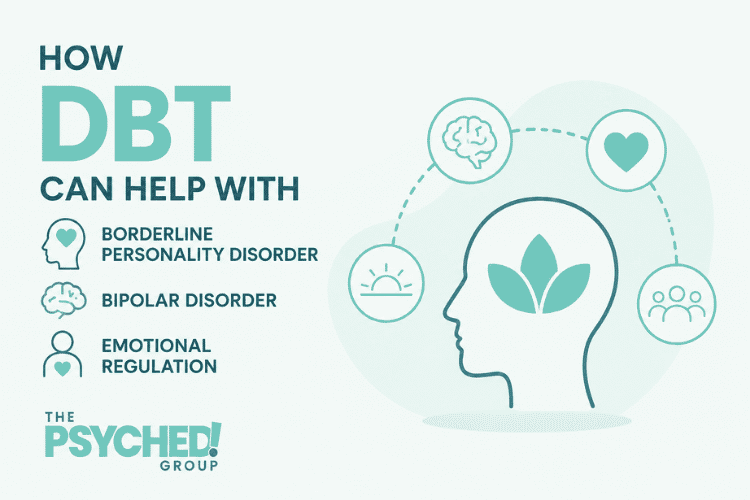
DBT was initially designed to treat Borderline Personality Disorder. Research suggests that it can help with Bipolar Disorder as well as PTSD. The most common situations where DBT can help are when someone has a difficult time managing their emotions, or when they have behaviors to cope which cause harm.
DBT’s not just for people who have a diagnosis. DBT techniques are used by a lot of people simply because they need better tools to deal with stress, anxiety, and difficult interpersonal relationships.
Can DBT help Borderline Personality Disorder(BPD)?
Yes. DBT is often regarded as one of BPD’s best treatments. Over time, many people experience real improvement in symptoms. BPD symptoms include mood swings as well as a shaky self-identity and relationships between close friends and far away.
According to National Institute of Mental Health data, about 1.4% of U.S. Adults have BPD. This rate is higher among people who already receive mental health care. DBT is associated with fewer self-harming behaviors, fewer hospitalizations for psychiatric reasons, and a lower rate of suicidal behavior in people who successfully complete the treatment. One oft-cited research found that most participants did no longer meet the BPD clinical criteria after one year of DBT. This can vary greatly from person to person. But it explains why DBT is often prescribed as the first treatment for BPD.
Can DBT be used to treat bipolar disorder?
DBT can be an important addition to Bipolar Treatment, especially when combined together with medication management. Bipolar Disorder involves a cycle of manic and depressive phases. DBT’s emotion regulation skills help individuals to better recognize and manage mood changes before they worsen.
DBT combined with medication showed improvements in depressive symptomatology and day-today functioning of some Bipolar Disorder patients. DBT in Bipolar isn’t meant to replace medication. Instead, it should be used alongside medication under the guidance and supervision of a psychiatrist.
Can DBT Improve emotional regulation?
DBT has as one of its core goals improving emotional control. Clients are often first to notice this. Emotional Regulating is the ability to experience strong emotions — like anger, sorrow, or panic — but not let them take over your actions.
DBT teaches tools for this. Name the emotion, understand what triggered it and choose a reaction instead of acting on autopilot. Over time, some clients feel that their emotions are less “hijacked”. They can now pause to think before they act. This skill has a tendency to be helpful for a variety of conditions. Not just BPD, or Bipolar Disorder.
What Happens During DBT Sessions
DBT usually includes weekly individual therapy plus a skills group. Many programs also offer telephone coaching during crisis moments. Individual sessions start with reviewing a card – a simple daily record of moods or urges as well as behaviors.
Then, therapists and clients can discuss what worked for them, what didn’t work, and which skills they could use the next time similar situations arise. Skills groups work like classes where clients practice and learn one skill at a given time.
DBT is structured in a way that allows you to build a toolkit between sessions.
Is DBT Effective?
DBT is a well-researched treatment, and it has shown significant results, especially when treating Borderline Personality Disorder. Numerous studies have demonstrated that DBT reduces self-harming, hospitalization, and other negative outcomes compared with traditional treatments. The review of several studies revealed a meaningful drop in the number of self-harming incidents amongst people who have completed DBT.
DBT, however, requires real commitment. The programs usually last from six months to a full year. Skills are best learned by practicing them consistently and not just talking about them. A licensed professional can help you set realistic and achievable expectations based upon your unique situation. Because the outcome depends on both the person’s personality and other circumstances in their life, they will be able to give you an accurate assessment.
A DBT Example
Here is how DBT would look in real life. Imagine John, someone who has a history of intense emotions, impulsive behavior, and frequent conflict within his relationships. In DBT individual sessions, he learnt to observe unhelpful thought processes as they arise, instead of acting on them straight away. By practicing mindfulness, he was able stay in the present moment and not spiral into old patterns. Over the course of a few weeks, he noticed that he was responding less impulsively to conflict and handling it with greater steadiness.
Sarah is a person who has a history with self-harm and often feels overwhelmed by anger. She was taught how to control her anger and distress by her DBT skills team. Interpersonal effectiveness helped her express herself instead of shutting out or lashing out. She became more confident as she grew older.
These examples are not real stories of clients, nor are they guaranteed to be achieved by everyone. However, these results reflect the type progress that DBT is intended to promote.
When Should Someone Consider a DBT Treatment?
You may want to consider DBT, if intense emotional feelings affect your relationships or safety. It can also impact your ability to function every day. You don’t have to be diagnosed as BPD in order to benefit.
DBT can be a great fit if you see these signs:
- Emotions pass quickly and are difficult to manage.
- You’ve self-harmed, or used other risky behaviors as a way to cope.
- Relationships can swing between feeling very near and falling apart
- You have emotional swings and a disorder like Bipolar Disorder, post-traumatic syndrome, or eating disorders.
- Traditional talk therapies don’t provide enough hands on tools
A licensed therapist could help you decide whether DBT makes sense, or you need to try something else.
How Do I Locate a DBT Therapist
You can find the best DBT therapist by searching for someone with specific DBT certification. DBT is structured and requires additional training beyond standard therapy. Some therapists who offer “DBT – informed” therapy do not run a complete DBT program. So, it is worth asking about their format and training.
The Psyched Group provides therapists with experience in DBT for Borderline Personality Disorders, Bipolar Disorders, and emotional control. Therapists can be contacted in person, via online therapy, or by email. You can Search our Therapist Directory, to find someone to fit your needs. Or Contact our team, if you need help.
Related Reading
FAQ
What does DBT stand for?
DBT, or Dialectical behavior therapy is what DBT stands. It’s a structured kind of talk-therapy that teaches you how to deal with intense emotions and distress. It was created by psychologist Dr. Marsha Linehan to treat Borderline Personality Disorder in the 1980s. Now, it can be used for other disorders as well.
DBT is not the same as Cognitive Behavioral Therapy?
It’s related, but it’s not the same. DBT was developed out of Cognitive-Behavioral Therapy (CBT). It shares many tools from CBT, including recognizing unhelpful thought processes. DBT focuses more on managing intense emotions. It adds mindfulness, distress tolerance skills and emphasizes the importance of managing intense emotions.
Will DBT help me with anger?
Definitely. DBT’s emotional regulation and distress tolerance techniques are designed to help individuals overcome anger or self-harm urges without taking action. Many people recognize warning signs and learn to use a particular skill in the present moment.
Am I required to have a DBT diagnosis in order to benefit from it?
Absolutely not. DBT wasn’t developed specifically for Borderline Personality Disorder. However, it can still be beneficial to anyone. DBT is often used by people who want to learn how to deal with their emotions and stress more effectively.
